Chinese size chart to US complete guide
There is no single Chinese size chart that works for every product. A shoe listing, baby romper, men's shirt and Taobao jeans page all need different checks before you trust the US estimate.
Quick answer: choose the chart by product type first, then verify the metric measurement: foot length for shoes, height for kids, chest for shirts, waist and hip for jeans, and bust/waist for women's clothing.
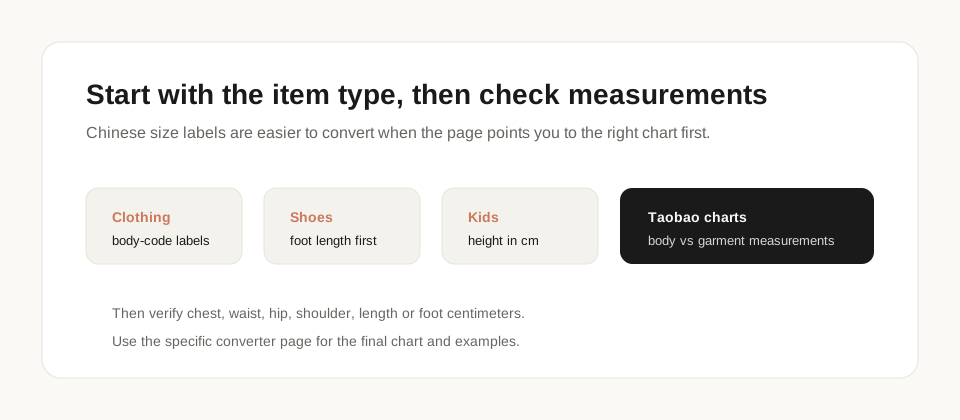
01 /Pick the right chart first
| What you are buying | Best first page | Measurement to verify |
|---|---|---|
| Women's tops or dresses | Chinese size to US women's | Bust, waist, garment length |
| Men's shirts or jackets | Chinese shirt size to US | Chest, shoulder, sleeve |
| Jeans or pants | Chinese jeans size to US | Waist, hip, thigh, rise |
| Adult shoes | Chinese shoe size to US | Foot length in cm |
| Baby clothes | Chinese baby clothes size chart | Child height and garment length |
| Kids clothes | Chinese kids clothes size chart | Child height in cm |
| Bras | Chinese bra size converter | Band and cup label |
| Taobao chart | Taobao size chart guide | Body vs garment measurement |
02 /Why one chart is not enough
Chinese marketplace listings often use the same letters that US shoppers recognize, but the meaning changes by product type. A Chinese L in a fitted shirt does not behave like a Chinese L in a loose hoodie, and neither should be converted the same way as a shoe label.
The most reliable pages use the metric clue that belongs to the product. Shoes should be checked by foot length. Kids and baby clothes should start from child height. Shirts and jackets need chest and shoulder measurements. Jeans need waist, hip and rise, not just a letter label.
03 /How to use a seller chart safely
- Find the exact chart for the item, not a general store chart.
- Check whether the values are body measurements or finished garment measurements.
- Convert the key metric value first, then use the US size only as a shortcut.
- For fitted items, compare against a garment or shoe you already own.
- When the chart gives no measurements, treat the conversion as a rough estimate.
04 /Common search shortcuts
Chinese size chart to US clothing
Use the clothing converters for letter labels and 160/84A-style body codes, then verify bust, chest, waist and garment length.
Chinese size chart to US shoes
Use foot length first. CN or EU-style shoe labels can be close, but brand width and toe shape still matter.
Chinese size chart to US kids
For children, height in centimeters is usually more useful than age. Use age only as a secondary clue.