RMB, CNY and yuan explained
Chinese prices can show RMB, CNY, yuan, CN¥ or a yuan symbol. For everyday conversion, those labels usually point to the same money amount, but they describe slightly different things.
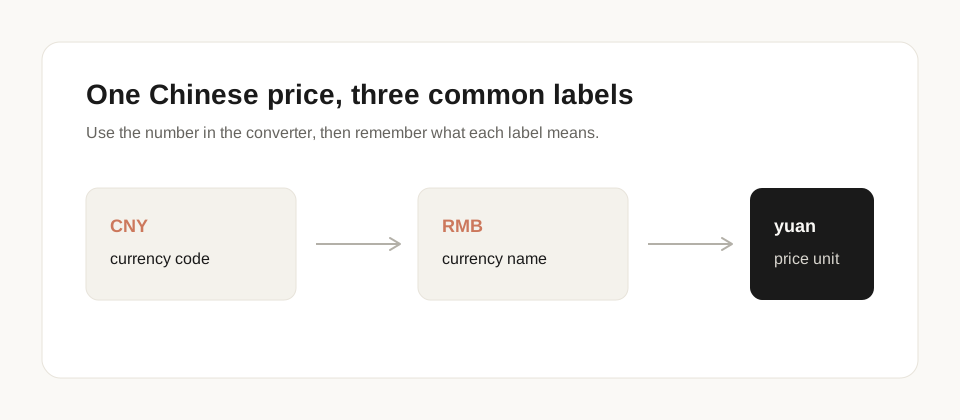
Quick answer: CNY is the ISO currency code, RMB is the currency name, and yuan is the main unit used in prices. A price of 100 yuan, RMB 100 or CNY 100 can be entered as 100 in the converter.
01 /What each label means
CNY is the international currency code used by data feeds, banks and exchange-rate tools. When an API says CNY to USD, it is talking about Chinese yuan as a currency pair.
RMB stands for renminbi, the official currency name. English-language shoppers often say "RMB to USD" because Chinese marketplaces and payment screenshots may use RMB as the label.
Yuan is the main unit of that currency. It works like saying "dollars" for USD. A product priced at 89 yuan is a price of CNY 89 or RMB 89.
02 /How Chinese price labels appear online
Chinese ecommerce pages often show prices with ¥, RMB, CNY, CN¥ or a yuan symbol. In a normal shopping context, enter only the number into the RMB to USD converter. For example, CN¥199, 199 yuan and RMB 199 all start with the input value 199.
Small units can also appear in older or payment-specific contexts. One yuan equals 10 jiao and 100 fen, but most online product prices are already shown in yuan.
03 /Which converter page to use
Use CNY to USD when the source is a currency feed, bank screen or exchange-rate table. Use yuan to dollar when the source is an ecommerce price, restaurant bill, hotel listing or travel budget. Use RMB to USD today when you specifically need the latest available market-rate estimate.
Specific amount pages such as 100 RMB to USD and 1000 RMB to USD are meant as intent pages, not permanent fixed answers. They now include editable tools on the page, because the dollar result changes with the selected reference date and currency pair.
04 /How to read the rate label
The currency tool tries to fetch a current market reference rate in the browser. If the request succeeds, the result label shows the reference source and rate date. If the request fails, no result is substituted. Retry the dated reference request; a bundled snapshot is not presented as a current rate.
That distinction matters for Google users because exchange-rate searches are time-sensitive. A good RMB converter should tell you not only the converted number, but also whether the number came from current data or a fallback estimate.
05 /Conversion limits
Rates move
Currency conversion is dynamic. A page can show the latest available rate, but your bank, card network or payment app may use a different timestamp.
Fees matter
A shopper's final cost can include card fees, payment-platform spread, customs, shipping and taxes. The converter only handles the currency math.
Use the right page
For common searches, use CNY to USD, yuan to dollar or RMB to USD today.