Chinese lunar calendar conversion limits
Chinese lunar dates are not a simple month-for-month translation of the Gregorian calendar. Leap months, year boundaries and supported date ranges all matter.
Quick answer: use the converter for dates from 1901 through 2099, check leap-month status when entering a lunar date, and remember that the Chinese zodiac year changes at Chinese New Year rather than January 1.
01 /Why lunar dates feel confusing
The Gregorian calendar is solar. The Chinese calendar is lunisolar, so its months follow lunar cycles while the year is adjusted to stay aligned with the seasons. That adjustment is why some years include a leap lunar month.
A leap lunar month is not the same thing as February 29. It is an extra lunar month inserted in certain years. If a family record or festival note says a date is in a leap month, the converter needs that detail to return the right Gregorian date.
02 /Zodiac years do not start on January 1
For many users, the biggest surprise is the zodiac animal. Someone born in January or early February may belong to the previous Chinese zodiac year because the zodiac year changes at Chinese New Year.
That is why a date-of-birth lookup should use the exact Gregorian date, not only the birth year. The Chinese zodiac calculator by date of birth handles that boundary directly.
03 /What the converter can and cannot verify
The calendar tool is best for practical modern lookups: birthdays, festival references, family records, zodiac checks and ordinary date comparison. It returns a structured result with the Gregorian date, lunar year, lunar month, lunar day, weekday and zodiac animal when those fields are available.
It should not be treated as a legal, genealogical or historical authority for dates outside the supported range. Older records may use local time, handwritten month names, reign-era notation or regional calendar conventions that need specialist references.
When a lunar source is vague, first identify the direction of conversion, then confirm whether the month is a leap lunar month. A non-leap fourth month and a leap fourth month are different calendar inputs and can point to different Gregorian dates.
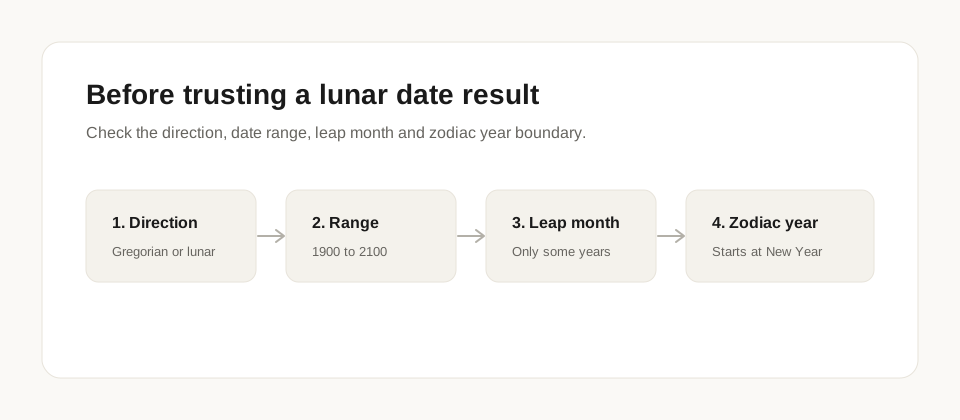
04 /Safe lookup checklist
Know the direction
Use Gregorian to Chinese lunar date for modern birthdays and events. Use lunar to Gregorian when the source already gives lunar month and day.
Check leap month
If a lunar date source mentions a leap month, enter it as a leap month. If it does not, leave leap month off.
Respect the range
The site's converter is intended for 1901–2099. Older historical dates need specialist calendar tables and source context.